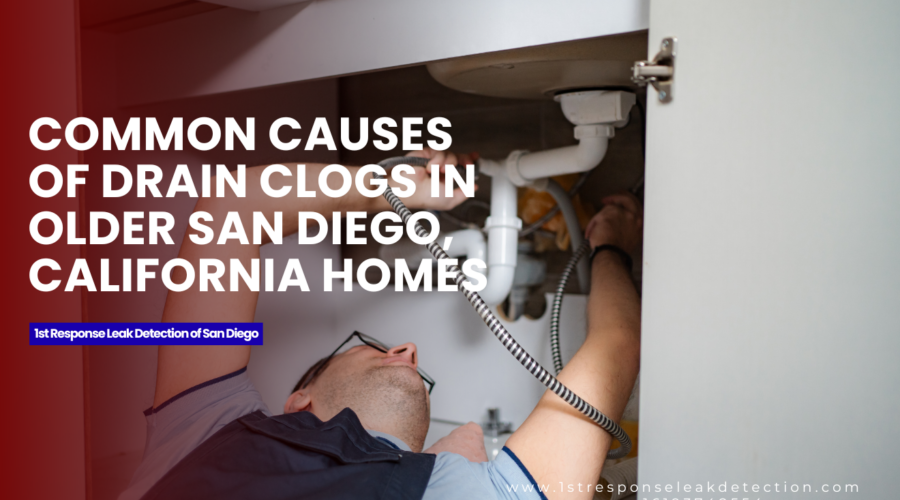
In many cases, why drains clog in older homes San Diego comes down to aging pipes, decades of buildup, and outdated plumbing layouts that don’t handle today’s daily use as well as they once did.
Older cast iron or galvanized steel pipes can corrode and narrow on the inside, so things like hair, soap scum, and toothpaste cling faster and block bathroom lines. In kitchen drains, years of grease, cooking oil, and food bits can harden into a stubborn layer that slows water down until it finally backs up.
Some homes also have older clay sewer lines that can shift or crack, letting roots sneak in and snag toilet paper and waste. And if your home still has older venting or long, flat drain runs, even “normal” use—like running the dishwasher after a big dinner—can push a slow drain into a full clog.
What “Clogged Drain” Usually Means in an Older San Diego Home
When homeowners search why drains clog in older homes San Diego, they’re usually dealing with one of two problems:
- A local blockage (one sink, shower, or tub drains slowly)
- A main line restriction (multiple fixtures back up, especially after flushing or doing laundry)
In older neighborhoods across San Diego, both are common because original drain and sewer materials tend to change shape, corrode, or shift over time. That age-related wear makes “normal” daily debris build up faster—so the answer to why drains clog in older homes San Diego is often about pipe condition more than what you did this week.
Top Reasons Drains Clog More Often in Older San Diego Houses
1) Pipe corrosion that reduces the inside diameter
Older galvanized steel and cast-iron drains can corrode internally. Over decades, the pipe’s smooth interior becomes rough and narrower, which causes:
- Hair and soap to snag more easily in bathroom lines
- Paper and waste to hang up sooner in branch drains
- Recurring clogs even after you “clear” the drain
This is one of the most common answers to why drains clog in older homes San Diego, because the pipe can look fine from the outside while the inside is heavily scaled.
2) Grease layering in kitchen drains
Kitchen clogs in older houses are often caused by years of fats, oils, and grease (FOG) coating the pipe. Over time, that coating hardens and traps food particles.
Signs the issue is grease layering (not a single blockage):
- The sink drains slowly most days, then suddenly backs up
- Hot water temporarily helps, but the problem returns quickly
- You hear gurgling when the dishwasher drains
If you’ve been wondering why drains clog in older homes San Diego right after cooking or using the dishwasher, grease layering is a prime suspect.
3) Roots in older clay sewer lines
Many older San Diego properties were built with clay sewer laterals. Clay is durable, but it can shift at joints. Tiny gaps invite root intrusion, and roots create a net that catches:
- Toilet paper
- “Flushable” wipes (which are not sewer-safe)
- Waste solids
Roots are a classic explanation for why drains clog in older homes San Diego, especially if you notice seasonal backups or the problem worsens after heavy irrigation or rain.
4) Low slope or long horizontal drain runs
Some older plumbing layouts include longer, flatter sections of drain line. Modern codes generally aim for consistent slope, but older systems can have:
- Bellies (low points that hold water)
- Flat runs that don’t self-clean well
- Multiple turns where buildup forms faster
That’s another practical reason why drains clog in older homes San Diego: even when you’re careful, the system doesn’t move waste as efficiently as newer layouts.
5) Venting issues that slow drainage
Drainage depends on proper venting to balance air pressure. In older homes, vents may be undersized, clogged, or modified over the years. Poor venting can cause:
- Slow drains even without a “solid” clog
- Gurgling sounds
- Trap siphoning (leading to odor)
While venting isn’t always the main reason why drains clog in older homes San Diego, it can amplify every other problem by slowing flow and letting debris settle.
Quick “Featured Snippet” Check: Local Clog vs. Main Line Problem
If you’re trying to pinpoint why drains clog in older homes San Diego at your property, this simple breakdown helps identify where to start.
| Symptom | Most Likely Cause | What It Suggests in Older Homes |
|---|---|---|
| Only one sink/shower is slow | Local buildup (hair, soap, grease) | Corroded/rough pipe walls grab debris faster |
| Multiple drains back up at once | Main sewer restriction | Root intrusion, shifted clay, or heavy scaling |
| Toilet bubbles when shower runs | Partial main line clog or venting issue | Older venting + aging lines create slow flow and pressure changes |
| Recurring clogs every few weeks | Not fully cleared blockage or pipe damage | Rough interiors, offsets, or bellies keep catching debris |
Why San Diego’s Environment Can Make Old Drain Problems Worse
San Diego’s climate and landscaping habits can indirectly contribute to why drains clog in older homes San Diego:
- Year-round root activity: Many trees and shrubs seek moisture constantly, not just during a single season.
- Irrigation near sewer laterals: Repeated watering can encourage roots to grow toward tiny cracks or joints.
- Soil movement over decades: Small shifts can misalign clay joints or create low spots where debris collects.
Even if the home has been “fine for years,” these slow changes build toward the moment a line finally starts backing up—leading many people to search why drains clog in older homes San Diego after a sudden clog that feels like it came out of nowhere.
Clog Warning Signs You Shouldn’t Ignore
Older plumbing rarely goes from perfect to disaster overnight. Watch for these early indicators:
- Slow drains in more than one room (kitchen + bathroom is a big clue)
- Gurgling sounds after flushing or draining a tub
- Intermittent backups that “fix themselves” temporarily
- Sewer odors near drains or outside cleanouts
- Water rising in the shower when the toilet flushes
These are often the practical, real-life symptoms behind why drains clog in older homes San Diego—especially when pipe interiors are already narrowed.
What Not to Do: Common Mistakes That Can Worsen Old Pipes
If you suspect why drains clog in older homes San Diego is tied to aging materials, avoid these moves that can cause damage or make blockages harder to remove:
Overusing chemical drain cleaners
Chemical cleaners can generate heat and may accelerate deterioration in older metal pipes or compromise older joints. They also rarely remove the full layer of grease or scale—so clogs return.
Using aggressive snaking without understanding the line
Older pipes can have weak points, offsets, or fragile sections. A snake can punch through a compromised line or get caught in roots, creating a bigger job.
Ignoring “minor” sewer smells
Odor can signal partial blockage, venting issues, or trap problems. If you’re dealing with recurring odor along with slow drainage, it can connect directly to why drains clog in older homes San Diego—and it’s worth addressing early.
How Professionals Confirm the Real Cause (Without Guessing)
Because older systems can hide multiple contributing issues, the best approach is to inspect rather than assume. A visual inspection of the sewer line helps confirm whether the problem is:
- Root intrusion
- Pipe belly (standing water)
- Offset joints
- Heavy scaling/corrosion
- Foreign object obstruction
That’s why a Sewer Camera Inspection is often the fastest way to get a clear answer—especially when the search is why drains clog in older homes San Diego and the clog keeps coming back.
Real-World Scenario: The “Recurring Kitchen Backup” Pattern
A common older-home pattern in San Diego goes like this:
- The kitchen sink starts draining slowly once or twice a week.
- After a busy night of cooking, the dishwasher drains and the sink backs up.
- The homeowner clears it temporarily, but it returns within weeks.
In many cases, the real reason why drains clog in older homes San Diego here isn’t just food debris—it’s a narrowed, grease-lined pipe. When the pipe diameter is reduced, a small amount of new grease can tip the system into a full stoppage.
Preventive Steps That Actually Work for Older Drain Systems
If you want fewer clogs (and fewer emergencies), focus on reducing what sticks and catching issues early.
Kitchen habits to slow grease buildup
- Collect grease in a container—don’t pour it down the drain
- Wipe pans with a paper towel before washing
- Use sink strainers to stop rice, coffee grounds, and scraps
Bathroom habits that reduce hair/soap clogs
- Install a hair catcher and clean it weekly
- Avoid flushing wipes (even if labeled “flushable”)
- Use less heavy soap/oily products if you have chronic slow drains
Maintenance that’s especially helpful in older homes
- Schedule periodic drain evaluations if clogs are recurring
- Address sewer odors quickly before they become backups
- Keep an eye on tree roots near the sewer path
For more ways to stay ahead of issues (not just react to them), this guide on preventative plumbing is a helpful next step.
When a Clog Points to a Bigger Plumbing Issue
Sometimes, why drains clog in older homes San Diego is really a symptom of a larger system problem—like compromised sewer line sections or hidden water issues that change how your drains perform. Drain problems can also overlap with broader plumbing system concerns such as venting, traps, and aging materials.
Consider stepping up the investigation if you notice:
- Backups that affect multiple fixtures
- Water damage or staining near walls/floors
- Sewer smells that come and go
- Drain issues after landscaping or root growth spurts
At that point, the question shifts from why drains clog in older homes San Diego to “what’s the condition of the line overall?”—and that difference matters for choosing the right fix.
Smart Next Steps for San Diego Homeowners Dealing With Repeat Clogs
If you’re repeatedly searching why drains clog in older homes San Diego, use this simple action plan:
- Identify the pattern: one fixture vs. multiple fixtures.
- Stop feeding the clog: pause garbage disposal use, avoid grease, catch hair.
- Document symptoms: when it happens, what triggers it, any gurgling/odors.
- Confirm with inspection: especially for suspected roots, clay line shifts, or bellies.
- Fix the cause, not the symptom: clearing a clog is different from solving recurring restrictions.
This approach prevents trial-and-error repairs and gets to the real reason why drains clog in older homes San Diego.
From Chronic Clogs to Clear Lines: Getting Back to Stress-Free Drains
In older properties, the real answer to why drains clog in older homes San Diego is usually a combination of age, material wear, and decades of buildup—not a single mistake you made. The good news is that once you identify whether you’re dealing with corrosion, grease layering, root intrusion, or slope/venting issues, the solution becomes much more straightforward.
Professionals who work with older San Diego plumbing systems every day typically rely on proven diagnostic methods (like camera inspections) and non-destructive detection tools to pinpoint restrictions accurately. That level of verification is what separates a temporary drain clearing from a long-term fix—especially when why drains clog in older homes San Diego keeps showing up as an ongoing problem rather than a one-time inconvenience.
When your next step is based on evidence instead of guesswork, you’re far more likely to end the cycle of repeat clogs and protect aging drain and sewer lines for the long run.
Frequently Asked Questions
Stop the Repeat Clogs—Get a Real Answer (Fast)
If you’re tired of guessing why your drains keep slowing down, it’s time to find out what’s actually going on inside those older pipes. A quick, professional evaluation can pinpoint whether you’re dealing with corrosion, grease layering, root intrusion, a belly in the line, or venting issues—so you’re not stuck clearing the same clog over and over. Reach out to 1st Response Leak Detection of San Diego to get clear next steps and a fix that matches the real cause—not just the symptoms.